
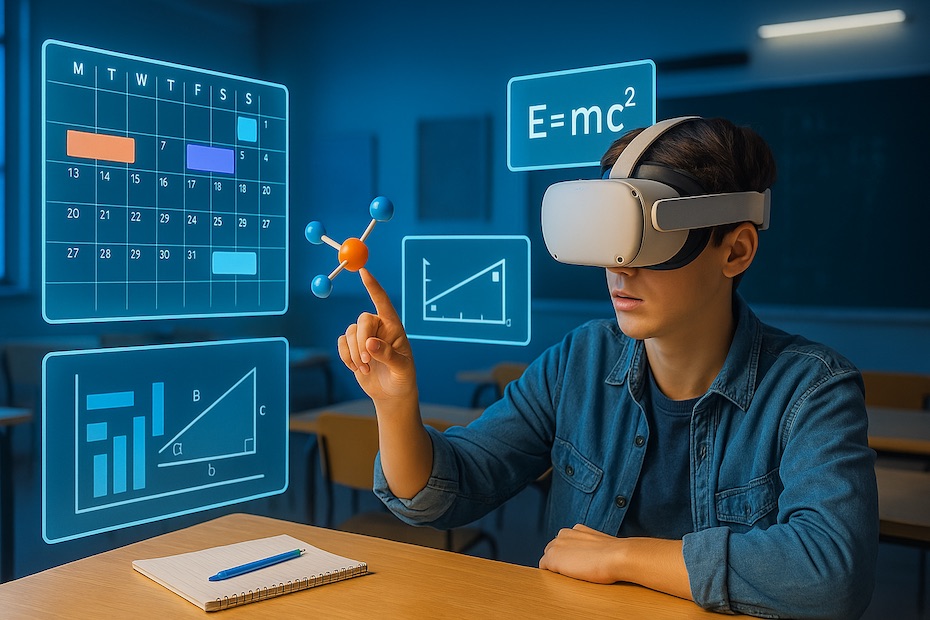
You’ve seen the shift firsthand—from raising your hand in a classroom to clicking “Unmute” on Zoom. But that’s just the beginning. Education is headed toward fully immersive environments where you don’t just attend class—you step inside it. The metaverse is no longer a buzzword; it’s shaping how you teach, learn, and collaborate. This article breaks down how we got here, where it’s going, and what you can do to adapt your approach and stay ahead of the curve in a virtual-first future.
Why Zoom Fatigue Opened the Door
Video conferencing solved one problem but created others. Static screens, muted reactions, and digital disconnection left you staring into a grid of faces with little engagement. Virtual classrooms through platforms like Zoom, Google Meet, and Microsoft Teams became survival tools—but not true educational environments. Students disengaged, instructors burned out, and retention rates dropped. The metaverse doesn’t just fix that—it replaces it with spatial presence, interaction, and agency.
Instead of watching a lecture, you can now walk through a virtual lab, collaborate with classmates via avatars, and interact with digital models. It’s not passive consumption anymore—it’s active experience. That shift changes how your brain processes and stores information, and it brings energy back into remote learning.
Metaverse Classrooms Are Already Here
You don’t have to wait for the future—immersive education is already happening. Meta is rolling out Quest VR headsets in K-12 classrooms. Arizona State University is building mixed-reality campuses. Roblox, Minecraft, and Spatial are hosting virtual STEM events and programming courses. These aren’t gimmicks—they’re platforms used by millions to learn and interact with curriculum in real time.
Companies like Mindflight7 in Australia are introducing immersive field trips and labs in secondary schools. Their early data shows students perform better in STEM subjects when they can visualize concepts in 3D or manipulate them directly. You’re not just reading a paragraph on cell division—you’re watching it happen inside a virtual microscope.
More Interaction, Better Retention
In a traditional video call, students might retain 20–30% of the content. But when you engage in active, immersive learning, retention can rise significantly—sometimes by 50% or more. That’s because your brain treats experiences in VR more like real memories. You’re solving problems, navigating environments, and using your senses to connect concepts.
You don’t need to be a tech expert to benefit. Platforms like ClassVR, ENGAGE, and AltspaceVR provide plug-and-play content for science, history, medicine, and engineering. A teacher guides the session, but the environment does the heavy lifting by keeping learners focused and curious. This model makes you more likely to absorb, apply, and remember what you’re being taught.
The Role of AI in Customizing Your Path
Smart algorithms are quietly powering the next wave of adaptive learning. In a metaverse classroom, your performance data feeds back to an AI engine, which can adjust the lesson in real time. If you struggle with a step in a physics simulation, the system slows down. If you breeze through a coding module, it challenges you with advanced tasks. That’s personalized education at scale.
You’ve probably already seen versions of this with apps like Duolingo or Khan Academy. The metaverse just adds a layer of immersion that makes the feedback loop more natural. You feel like you’re working with a personal tutor who understands your strengths and weaknesses.
Accessibility and Inclusion on the Line
Virtual reality raises big questions about who gets to participate. Not every student has a $500 headset or fiber-optic internet. That’s why schools and tech firms are exploring device-agnostic solutions—where a smartphone or laptop can still plug into the experience. Meta has piloted loaner headset programs in U.S. schools. Google’s Project Starline is building ultra-realistic telepresence booths. But equity is still a challenge you can’t ignore.
Safety is another concern. Virtual harassment, particularly toward women and minorities, has made headlines. If you’re designing virtual spaces, you need to build in safety tools like personal boundaries, mute functions, and real-time moderation. A classroom must feel safe—whether it’s in a building or in a headset.
Real-World Application Gets a Boost
Metaverse learning isn’t just a novelty—it’s a job training engine. Nursing students can practice inserting IVs in VR. Engineering students can test mechanical systems in a simulated environment without breaking anything. Soft skills—like presenting to a group, negotiating, or interviewing—can also be rehearsed in realistic avatarscapes.
You’re no longer learning in isolation. Through connected platforms, you can walk into a digital study group with peers from five different countries. You’ll build global skills without needing a passport. That kind of exposure used to be rare or reserved for exchange students. Now, it’s baked into the experience.
Teachers Are Still the Heart
With all the hype around smart goggles and 3D avatars, one thing remains clear: teachers aren’t going anywhere. You need someone who knows how to structure learning, respond to student needs, and spark curiosity. The tech may change the tools, but it doesn’t replace mentorship, empathy, or instructional design.
What you’ll see is a shift in the teacher’s role—from lecturer to guide, from grader to learning architect. Teachers will use metaverse tools to enhance what they do best: connect students to knowledge in a way that sticks. Your goal as an educator isn’t to compete with the machine—it’s to lead it.
Top Features of Virtual Metaverse Classrooms
- Immersive environments using VR/AR
- AI-powered personalized learning paths
- Real-time collaboration with global peers
- Gamified modules for better engagement
- Safe, moderated virtual spaces
In Conclusion
You’re no longer stuck in a static Zoom box. With the metaverse, classrooms become interactive, sensory-rich environments where learning feels real, memorable, and inclusive. While equity, hardware costs, and moderation remain challenges, the potential to transform education is massive. Whether you’re a teacher building the future or a student preparing for it, the classroom is becoming a place you can step into, not just log into.
Explore more immersive education resources and case studies on my website, where I track the latest developments in metaverse learning and virtual pedagogy.

Jared Ailstock is Managing Partner at AIP Capital with over 15 years of experience in aviation finance and investment. He specializes in global aviation strategy, asset-backed transactions, and sustainable growth across the aerospace industry.